

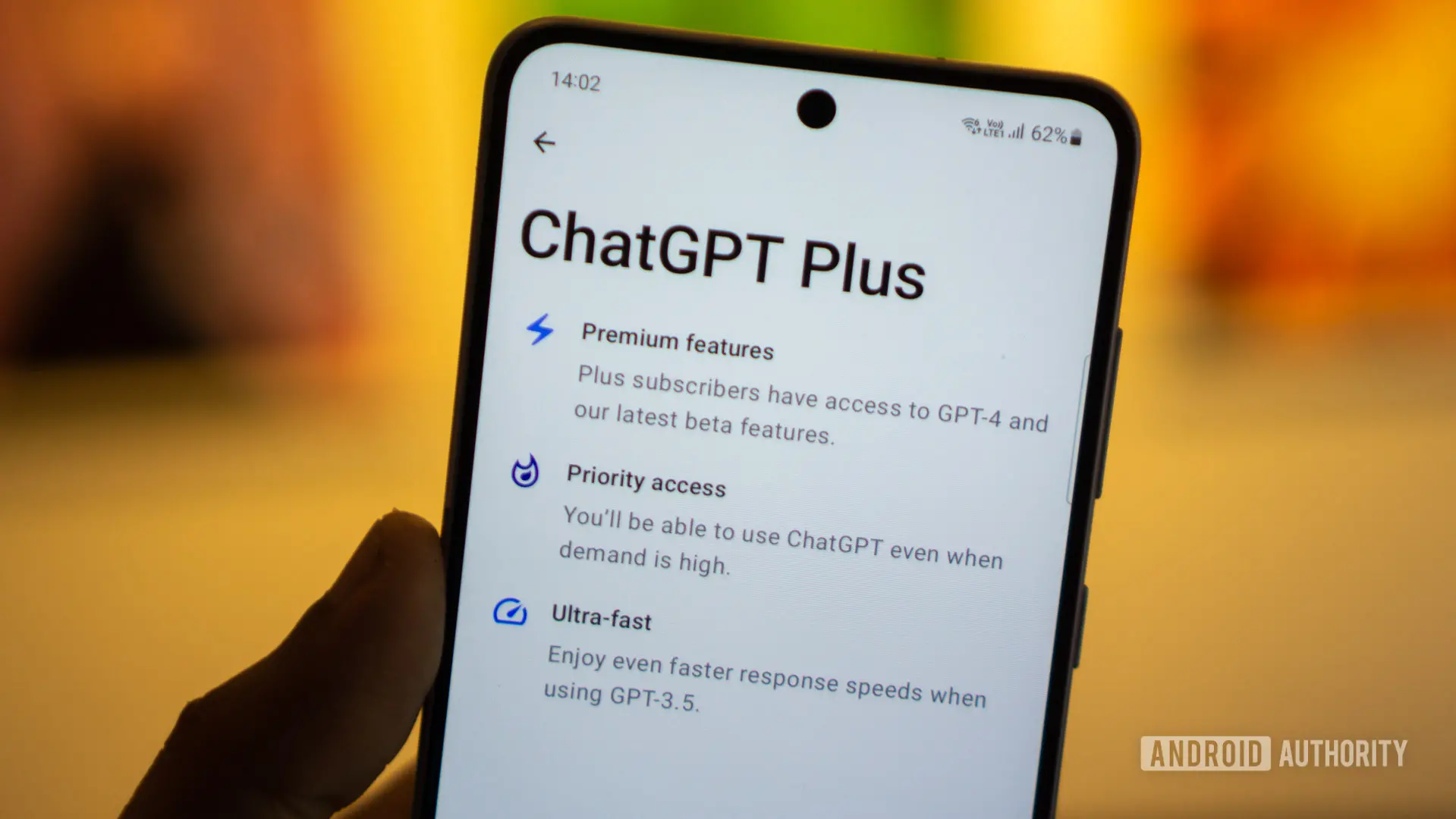
OpenAI has taken a bold step into the realm of personal finance by previewing a new feature that lets ChatGPT connect directly to users' savings accounts, credit cards, and other financial instruments. For ChatGPT Pro subscribers in the United States, this means the AI can now provide hyper-personalized advice based on real transaction data rather than generic tips. The move signals a growing trend of artificial intelligence integrating deeply into everyday financial management, but it also sparks critical questions about privacy, accuracy, and the trustworthiness of AI systems handling sensitive data.
What the New Finance Experience Offers
The feature, announced on March 27, 2025, is rolling out initially to ChatGPT Pro users on the web and iOS platforms. Once enabled, users can link their financial accounts—including checking, savings, investment, and credit card accounts—through a secure data aggregation service. ChatGPT then gains read-only access to balances, transaction histories, and liabilities. It cannot view full account numbers or initiate any transfers or payments.
Upon connection, users see a dashboard summarizing their financial flows. They can ask ChatGPT natural-language questions such as "How much did I spend on dining out last month?" or "Can I afford to take a lower-paying job?" The AI analyzes the linked data to offer tailored savings plans, identify recurring subscriptions, and review spending patterns across categories like travel or entertainment. OpenAI’s examples include helping a user create a realistic savings goal based on their income and expenses or flagging unnecessary subscriptions.
How It Works: Technology and Partnerships
OpenAI likely partners with a financial data aggregator like Plaid, MX, or Yodlee to facilitate secure connections. These services use tokenized authentication and encrypt data in transit and at rest. ChatGPT accesses the aggregated data through an API layer designed to prevent any write operations. OpenAI states that synced account data is deleted within 30 days after a user disconnects an account, although aggregated insights may be retained in anonymized form for model improvement.
The AI model powering this feature is the same underlying GPT-4o or later version used in Pro, fine-tuned for financial reasoning and numerical accuracy. However, OpenAI cautions that the tool is not a certified financial advisor and should not be relied upon for critical investment decisions or tax planning without human verification.
Potential Benefits for Users
The advantages are substantial for individuals who want a clear picture of their finances without manual spreadsheet work. ChatGPT can instantly categorize hundreds of transactions, spot trends over time, and generate visual summaries. For example, a user might discover that a monthly coffee subscription costs more than they realized, or that dining out on weekends accounts for 30% of their discretionary spending. The AI can then propose actionable steps, like setting a monthly dining budget or switching to a cheaper subscription tier.
Another powerful use case is scenario planning: asking "If I cut my entertainment spending by 20%, how much extra could I save for a vacation in six months?" The AI runs calculations based on actual spending data, making the advice far more relevant than generic 50/30/20 budget rules. For those considering career changes, ChatGPT can analyze whether a lower salary would still cover essential expenses and savings goals.
Privacy and Trust Concerns
Despite the utility, the feature raises legitimate privacy worries. Entrusting a third-party AI with detailed financial transaction data is a significant leap of faith. Even with read-only access, the data is extremely sensitive: retailers, dates, amounts, and even merchant categories can reveal a user's habits, health conditions, and personal relationships. OpenAI’s track record with data security and model hallucinations (unpredictable or incorrect outputs) does not inspire universal confidence.
The company has implemented several safeguards: accounts can be disconnected at any time, synced data is deleted within 30 days, and the AI cannot perform any financial actions. However, critics point out that aggregated data might still be used to train future models if anonymization is imperfect. Moreover, any breach of OpenAI’s servers could expose millions of transaction records. While the company has not had a major security incident, the sheer volume of sensitive data makes it an attractive target.
Comparison with Existing Financial Tools
This is not the first time an AI has been used for personal finance. Apps like Mint, YNAB, and PocketGuard have long offered budget tracking and insights. However, those tools typically rely on rule-based algorithms or limited AI. ChatGPT’s strength lies in natural language interaction and generative analysis—users can ask open-ended questions and get nuanced answers. For instance, "Why did my spending spike in September?" might prompt an AI to highlight a large purchase or seasonal trend. Traditional apps often require users to dig into reports themselves.
But other AI-powered competitors exist. Cleo and Plum use conversational AI similar to ChatGPT, though with narrower scope and often in specific regions. OpenAI’s advantage is its massive user base and advanced language model, but it enters a market where trust is already fragile due to data breaches at other aggregators.
Availability and Future Rollout
Currently, the finance experience is limited to ChatGPT Pro subscribers in the United States, with a $200 monthly fee. The feature is accessible only on the web and iOS mobile app; Android users must wait for future updates. OpenAI has indicated that Plus tier users may gain access later in 2025, likely at a lower price point. International expansion is also planned, but regulatory hurdles concerning financial data handling vary by country.
For now, early adopters can test the feature and provide feedback. OpenAI encourages users to treat the tool as a supplementary assistant, not a replacement for professional financial advice. The company also emphasizes that users retain full control—accounts are linked explicitly, and consent can be revoked instantly.
Broader Implications for AI and Finance
The integration of ChatGPT with financial accounts marks a significant step toward everyday AI agents that manage personal data autonomously. If successful, it could pave the way for similar features in healthcare, insurance, and legal domains. However, it also sets a precedent for data monetization and privacy erosion. Regulators may need to revisit frameworks like the Gramm-Leach-Bliley Act in the US or GDPR in Europe to address AI-specific risks.
Financial literacy could benefit from such tools—many people struggle to budget effectively because they lack real-time insights. An AI that explains complex concepts in simple language can democratize financial planning. Yet, over-reliance on AI might lead to poor decisions if users blindly follow algorithmic suggestions without understanding underlying assumptions.
As with any early-stage technology, the balance between utility and risk will determine adoption. OpenAI’s finance feature is a bold experiment that could either revolutionize personal money management or become a cautionary tale about the limits of AI trust. For now, the company asks users to take a leap of faith—one that many may find both exciting and unsettling.
Source: Android Authority News