

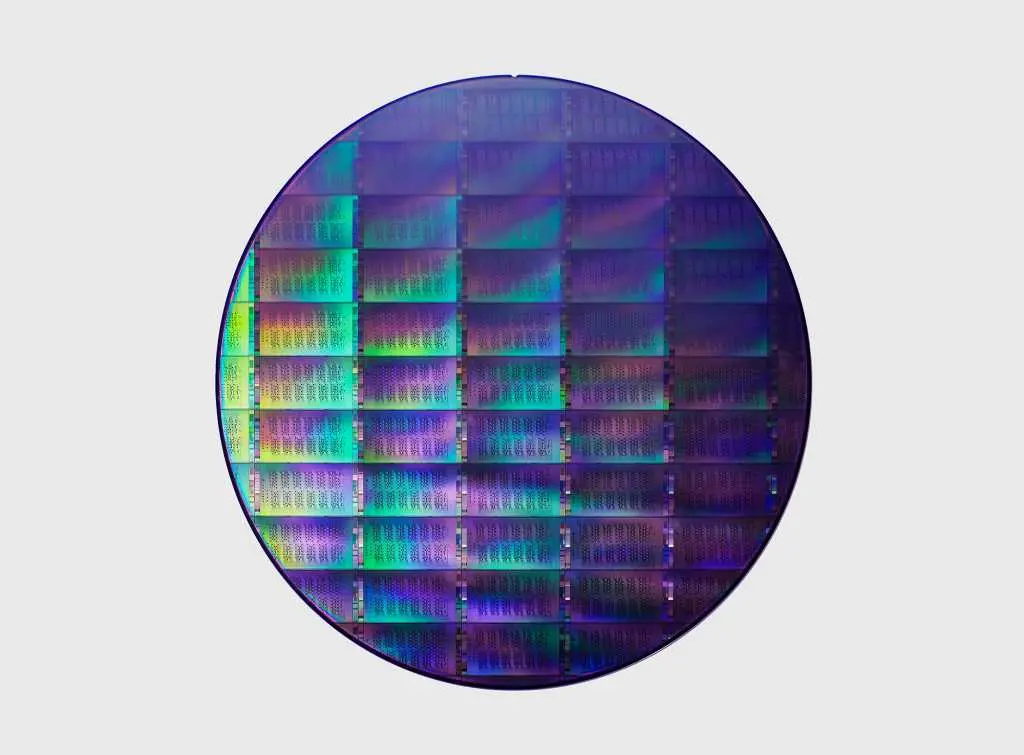
IBM and the US government have announced a joint investment of $2 billion to create the first dedicated quantum chip fabrication facility in the United States. The Trump administration is contributing $1 billion, which IBM will match, to launch a new company named Anderon. The fabrication plant will be built in Albany, New York, a region already known for its semiconductor research and development ecosystem.
According to IBM CEO Arvind Krishna, the company's long history in silicon wafer fabrication and quantum computing positions Anderon to become a critical player in the emerging quantum technology supply chain. "Our work in silicon wafer fabrication has been a key to IBM's success and will be critical to enable a broader quantum technology landscape," Krishna said. "Anderon will be well-positioned to fuel America's fast-growing quantum technology industry."
Anderon will produce quantum wafers not only for IBM but also for other hardware vendors, effectively creating an open foundry model for quantum chips. This approach mirrors the semiconductor foundry model that has driven innovation in classical computing, where companies like TSMC manufacture chips designed by various clients. By offering quantum wafer fabrication as a service, Anderon aims to accelerate the development of quantum systems across the industry.
The Quantum Computing Landscape
Quantum computing represents a paradigm shift in information processing. Unlike classical computers that use bits representing 0 or 1, quantum computers use qubits, which can exist in multiple states simultaneously thanks to the principles of superposition and entanglement. This allows quantum systems to solve certain types of problems exponentially faster than classical computers, particularly in areas such as drug discovery, materials science, cryptography, and optimization.
IBM has been a pioneer in quantum computing for decades. The company launched its first commercial quantum computer, the IBM Q System One, in 2019, and has consistently released increasingly powerful quantum processors. Its roadmap includes systems with over 1,000 qubits by the end of 2025, and the new foundry is expected to support the manufacturing of such advanced chips. However, building quantum processors is notoriously difficult. Qubits are extremely sensitive to environmental noise and require near-absolute-zero temperatures to operate. The fabrication process demands ultra-high precision and specialized materials that differ significantly from conventional CMOS manufacturing.
The US government's investment in Anderon is part of a broader push to secure American leadership in quantum technology. The administration also awarded funding to other companies in the quantum space, including GlobalFoundries, D-Wave Quantum, and Rigetti Computing. GlobalFoundries, a major semiconductor manufacturer, will focus on integrating classical and quantum chips. D-Wave specializes in quantum annealing systems, while Rigetti builds superconducting quantum processors. These investments signal a coordinated effort to build a domestic quantum ecosystem that spans hardware, software, and manufacturing.
Why a Dedicated Quantum Chip Foundry Matters
Currently, most quantum processors are fabricated in small-scale research labs or modified classical semiconductor fabs. This approach limits yield, scalability, and consistency. A purpose-built quantum chip foundry can optimize every stage of production for the unique requirements of qubit devices. For example, superconducting qubits, one of the leading quantum modalities, require extremely thin films of materials like aluminum and niobium deposited on silicon or sapphire wafers. The fabrication must avoid defects that would cause decoherence, the loss of quantum information. A dedicated facility can develop specialized processes, maintain stringent cleanliness standards, and run dedicated equipment that is not contaminated by conventional semiconductor processes.
Albany, New York, is already home to the SUNY Polytechnic Institute's College of Nanoscale Science and Engineering, which operates one of the most advanced semiconductor research facilities in the world. The region has attracted major investments from companies like IBM, GlobalFoundries, and Applied Materials. By locating Anderon in Albany, IBM and the government can leverage existing infrastructure, talent, and supply chains. The new fab is expected to create hundreds of high-skilled jobs and further cement the area's reputation as a hub for advanced chip manufacturing.
The $2 billion investment is substantial but reflects the enormous cost of building a cutting-edge fabrication plant. A typical state-of-the-art semiconductor fab costs $10 billion or more, but quantum chip fabs are smaller and require less expensive equipment, though still significant. Anderon's initial facility will focus on 200mm wafers, which are common in research and niche production. Over time, the company may expand to 300mm wafers as quantum technology matures.
Broader Implications for the Quantum Industry
The establishment of an open quantum foundry could lower the barrier to entry for startups and academic institutions that have promising qubit designs but lack the resources to build their own fabrication lines. By providing access to professional manufacturing services, Anderon could accelerate the pace of innovation and help discover which qubit architectures are most viable for scalable quantum computers. Currently, several different types of qubits are being pursued: superconducting circuits (used by IBM, Google, Rigetti), trapped ions (IonQ, Honeywell), photonic qubits (PsiQuantum), and topological qubits (Microsoft). A flexible foundry could potentially support multiple modalities, though initially Anderon will focus on superconducting qubits based on IBM's technology.
The government's involvement also raises questions about national security and technology export controls. Quantum computers capable of breaking current encryption standards are still years away, but the potential threat has prompted governments to restrict the export of quantum technology. By building domestic manufacturing capacity, the US aims to reduce reliance on foreign suppliers and protect critical intellectual property. The bipartisan support for quantum funding, including the National Quantum Initiative Act of 2018 and subsequent appropriations, underscores the strategic importance of this technology.
IBM's decision to spin off its quantum fab into a separate company, Anderon, is reminiscent of its earlier corporate strategy of creating independent entities to focus on emerging technologies. For example, IBM created the GlobalFoundries joint venture with AMD in 2009, which later became an independent foundry. That move allowed IBM to offload capital-intensive manufacturing while retaining design and innovation. Similarly, Anderon can attract additional customers and investors beyond IBM, potentially leading to more efficient operations and faster adoption of quantum computing across industries.
The timeline for Anderon's construction is not yet public, but similar projects typically take two to three years to become operational. Once online, the foundry is expected to begin producing small batches of quantum wafers for research and development, with volume production scaling up as the technology matures. IBM has stated that it will continue to design its own quantum processors and collaborate with Anderon to optimize fabrication processes.
Quantum computing is still in its infancy, but the investments being made today will determine the leaders of tomorrow. The IBM-government partnership to build the first dedicated quantum chip foundry represents a significant step toward making quantum computers a practical reality. By combining public funding with private expertise, the US is positioning itself to compete with other nations, particularly China, which has also made quantum technology a national priority. The success of Anderon could set a template for how governments and companies collaborate to build the infrastructure needed for next-generation computing.
Source: Network World News