

Shortwave radio is home to some of the most fascinating and unsettling signals ever transmitted. From a relentless buzzing that has continued for decades to calm voices reading random numbers, these broadcasts are accessible to anyone with an internet connection and a curious mind. This guide takes you through the creepiest shortwave signals you can hear right now, explains how to find them, and expands on the historical and technical context that makes them so intriguing.
What Makes Shortwave Different From Everyday Radio
Most people are familiar with FM and AM radio, which operate in the VHF and lower frequency bands. These signals travel in straight lines and are limited by the curvature of the Earth and obstacles like buildings and hills. Shortwave radio, specifically the high-frequency (HF) band from 3 to 30 MHz, behaves very differently. When a shortwave signal is transmitted upward, it encounters the ionosphere, a layer of charged particles in the upper atmosphere. Instead of continuing into space, the signal is refracted, or bent, back down to Earth. This is called skywave propagation.
Skywave allows shortwave signals to travel thousands of miles, sometimes across entire continents. A listener in Europe can pick up a transmitter in Asia or Australia with the right antenna and conditions. This unique characteristic made shortwave essential for long-distance communication before satellites became common. Today, it is still used by military, aviation, maritime, and various utility services. It is also the playground for mysterious stations that have no official explanation.
The Russian Buzzer (UVB-76): A Decades-Long Enigma
The most famous of these mysteries is UVB-76, commonly known as the Buzzer. Tune to 4625 kHz in upper sideband (USB) mode, and you will hear a repetitive, monotonous buzzing tone. This signal has been broadcasting continuously since at least the 1970s. The buzzing sound is like a mechanical heartbeat, sometimes changing pitch or rhythm. Occasionally, the buzzing is interrupted by brief voice transmissions in Russian. These messages are often numbers, codenames, or short phrases. The station has changed call signs several times, but its purpose remains unknown.
Popular internet lore claims UVB-76 is a dead-hand system that would trigger a nuclear response if Russian leadership were eliminated. In reality, most experts believe it is a channel marker or a simple signal used to test propagation and maintain frequency occupancy. Yet the lack of official confirmation, combined with the eerie sound, has fueled endless speculation. The station has been targeted by radio pranksters who overlay music or voice clips, but the genuine transmission continues unabated.
To hear UVB-76, use an online SDR like those listed on rx-tx.info. Search for a KiwiSDR or WebSDR located in Europe, especially near the suspected transmitter site in western Russia. Set the mode to USB and frequency to 4625 kHz. The buzzer is usually audible at night when propagation is better.
Other Russian Utility Stations: The Pip and the Squeaky Wheel
UVB-76 is not alone. The Pip transmits at 5448 kHz during daylight and 3756 kHz at night. It emits a short, repeated pip sound, similar to a metronome. Like the Buzzer, it occasionally breaks into Russian voice messages. The Squeaky Wheel, on 5367 kHz (day) and 3363.5 kHz (night), produces a high-pitched two-tone squeak that quickly becomes annoying. Both are likely military or government communication systems used for channel maintenance or as beacons.
The persistence of these signals over decades, with minimal variation, highlights the secretive nature of shortwave utility stations. They are not meant for public consumption, yet they remain accessible to anyone who tunes in.
Military Traffic: Skyking and the HFGCS
The US military operates the High Frequency Global Communications System (HFGCS), a network of powerful transmitters that can reach aircraft anywhere in the world. Frequencies like 11175, 8992, 4724, and 15016 kHz carry encrypted voice and data messages. One of the most famous phrases heard on HFGCS is “Skyking, Skyking, do not answer.” This is a priority broadcast ordering all receiving stations to remain silent. It is often followed by Emergency Action Messages (EAMs), which are encoded orders for nuclear forces.
The phrase “Skyking do not answer” gained notoriety online when public WebSDRs first appeared. Listeners captured audio clips and shared them on forums. While the messages are encrypted and unreadable, the drama of hearing authoritative voices recite alphanumeric codes over static is undeniable. To try, tune to 8992 kHz USB during US daytime hours. Patience is required, as traffic can be sparse.
Number Stations: Spies in the Static
Perhaps the creepiest signals of all are number stations. These are shortwave broadcasts that read sequences of numbers, letters, or phrases using a calm, often female, voice. The classic example is HM01, a Cuban station that transmits Spanish voice groups mixed with digital data bursts. Another is E11 (also called Oblique), which uses English voices to read groups at scheduled times. Their schedules vary by day of the week. HM01 can be heard on frequencies like 9330, 10345, and 11435 kHz in AM mode. E11 appears on frequencies such as 8102 and 12630 kHz depending on the day.
Number stations have been traced to intelligence agencies. They are believed to be one-way communication channels for spies in the field. The numbers are meaningless without a one-time pad, making the communication perfectly secure. The very existence of these broadcasts suggests an active spy network operating worldwide. The routine, emotionless delivery of the voices adds to the unease. Listening feels like eavesdropping on a secret that you can never fully understand.
There are hundreds of known number stations. The website Priyom.org maintains a comprehensive database of current schedules and frequencies. It is an invaluable resource for anyone wanting to hunt for these signals in real time.
Tools for Listening: Online SDRs
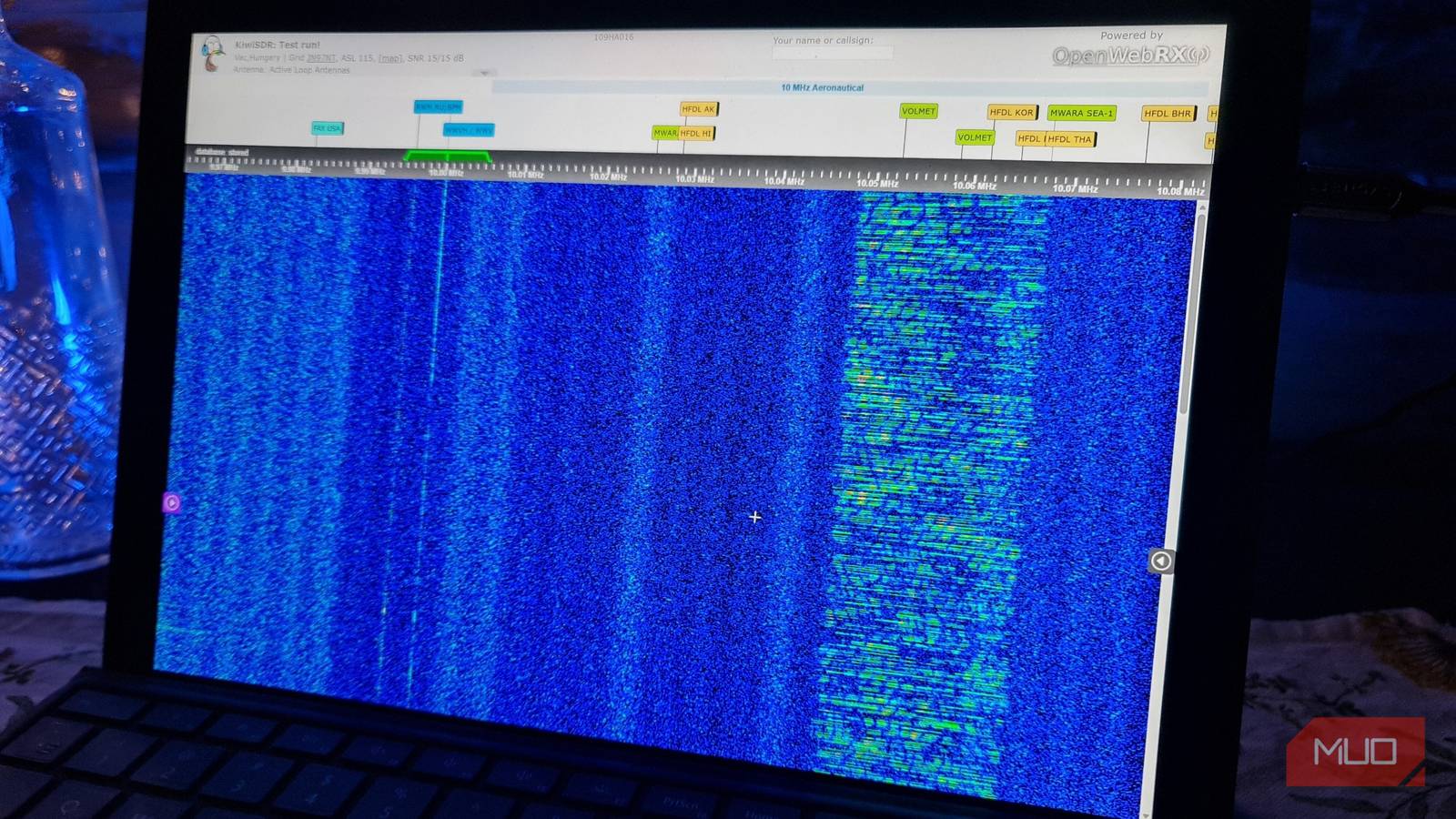
You do not need a shortwave radio or a license to explore these signals. Online Software Defined Radios (SDRs) allow you to control a real receiver via a web browser. The most popular types are KiwiSDR, OpenWebRX, and WebSDR. These receivers are hosted by hobbyists and institutions worldwide. Websites like rx-tx.info provide a map of available SDRs. You can filter by location, band, and receiver type.
When choosing an SDR, look for one that is currently in darkness (nighttime propagation favors shortwave), with a good signal-to-noise ratio. The waterfall display shows signals as colorful bands, making it easier to spot activity. Once you find a target frequency, adjust the mode and bandwidth to match the signal. USB is common for voice and utility modes, AM for broadcast stations.
Online SDRs also allow you to record audio and capture screenshots of the waterfall. This is helpful for sharing finds or analyzing patterns. Many receivers have built-in features like frequency presets and automatic gain control.
Expanding the Hunt: Time Stations and Digital Modes
To sharpen your skills, start with time stations like WWV (US) and CHU (Canada). WWV broadcasts on 2.5, 5, 10, 15, and 20 MHz and provides continuous time announcements and ticks. CHU operates on 3330, 7850, and 14670 kHz. These stations are reliable and easy to identify. Once you know what a stable utility signal looks like on the waterfall, you can better spot anomalies like burst transmissions or irregular patterns.
Digital modes also appear on shortwave. You might hear the whine of a fax transmission, the chirp of RTTY, or the chug of PSK31. These are often used by amateur radio operators but can also carry military data. The free program Fldigi can decode many of these modes from audio recordings, turning static into text.
Beyond the well-known signals, there are countless other mysteries. Pirate stations play music on unauthorized frequencies. Strange repeating patterns suggest automated test equipment. Some signals appear and disappear without warning. The shortwave band is a living museum of communication technology, where signals from the Cold War era coexist with modern digital streams.
For the dedicated listener, the reward is not just hearing a creepy sound but understanding the technical and historical layers beneath. The internet has made it possible for anyone to become a radio archaeologist, searching the airwaves for whispers from a hidden world. Whether you are drawn by Cold War espionage, military protocols, or simply the thrill of the unknown, shortwave has something to offer. And it is all live, right now, waiting for you to tune in.
Source: MakeUseOf News