
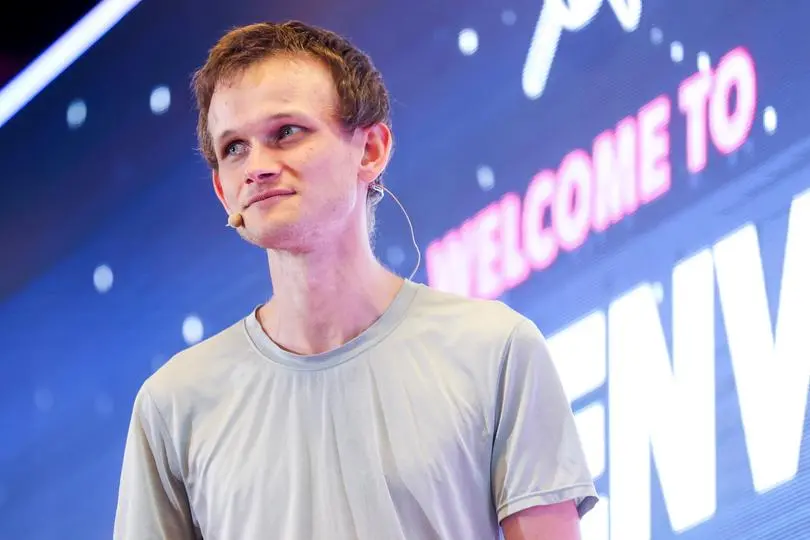
Ethereum co-founder Vitalik Buterin has proposed a novel approach to blockchain security that combines artificial intelligence with formal verification techniques. In a recent blog post, Buterin argued that AI-assisted formal verification—using machine-checkable mathematical proofs to verify software behavior—could become one of the most important tools for cybersecurity in the crypto ecosystem.
The Convergence of AI and Formal Verification
Formal verification is a method by which software can be mathematically proven to behave correctly according to its specification. Unlike traditional testing, which can only show the presence of bugs, formal verification can demonstrate the absence of entire classes of errors. This technique has been used for decades in safety-critical systems such as aerospace and medical devices, but its application in blockchain and smart contract development has been limited due to the high cost and expertise required.
Buterin argues that AI can lower these barriers by automating the generation of formal proofs and by assisting developers in writing code that is easier to verify. “As AI makes hacking and bug discovery easier,” Buterin wrote, “the same technology can also be used to harden systems against attacks. AI-assisted formal verification may be the key to staying ahead in the cybersecurity arms race.”
AI as a Double-Edged Sword
The Ethereum co-founder acknowledges that AI poses new risks. AI-generated code, while often functional, can contain subtle vulnerabilities that are difficult to detect using conventional methods. Moreover, AI-driven tools can be used by malicious actors to automatically scan for and exploit flaws in smart contracts and blockchain protocols.
Buterin pointed to recent incidents where AI-generated code was deployed in decentralized finance (DeFi) protocols and later found to contain critical bugs. “We are entering an era where the cost of finding vulnerabilities is dropping dramatically on both sides,” he noted. “Defenders need equally powerful tools to maintain the integrity of the systems they protect.”
How Formal Verification Works in Practice
Formal verification typically involves defining a mathematical model of the software and specifying its desired properties (e.g., “the contract never allows a user to withdraw more than their balance”). Then, using automated theorem provers or model checkers, the system proves that the software satisfies those properties. If a property fails, the tool provides a counterexample that can be used to fix the bug.
AI can assist in several ways. Machine learning models can help generate loop invariants—statements that remain true throughout the execution of a program—which are often the hardest part of formal verification. AI can also suggest specifications from natural language descriptions or translate existing code into formal languages like Coq or Isabelle. Some research groups have already demonstrated that large language models can produce formal proofs with human assistance.
Impact on Cryptocurrency and Blockchain Security
The implications for crypto are profound. Smart contracts on Ethereum and other platforms have suffered billions of dollars in losses due to hacks, many of which could have been prevented by formal verification. Buterin envisions a future where standard practice is to write formally verified smart contracts, with AI tools making the process as routine as unit testing is today.
Beyond smart contracts, formal verification could enhance the security of zero-knowledge proofs, multi-party computation, and other cryptographic primitives used in blockchain systems. For example, verifying that a zk-SNARK implementation is correct is a notoriously difficult task, but AI-assisted formal verification could make it tractable.
Buterin also highlighted the role of formal verification in securing Layer 2 scaling solutions. Optimistic rollups, ZK-rollups, and sidechains all rely on complex cryptographic assumptions that must be verified. A single bug in a rollup’s bridge contract could lead to massive losses. “Formal verification is not a silver bullet, but it is a powerful component of defense in depth,” Buterin wrote.
Broader Internet Infrastructure
The concept extends beyond blockchain to other critical internet infrastructure. Buterin argued that AI formal verification could be used to secure voting systems, certificate authorities, DNS, and even the core protocols of the internet itself. “If we succeed in making formal verification accessible and practical, we could dramatically reduce the number of catastrophic security incidents across the digital landscape,” he said.
He also noted that the approach aligns with a growing trend in the industry toward “provable security” and “zero trust” architectures. By mathematically proving the behavior of software components, organizations can layer defenses more effectively.
Challenges and Roadblocks
Despite the promise, Buterin admitted that significant challenges remain. Formal verification tools currently require highly specialized knowledge to use effectively. The mathematical proofs can be fragile, and small changes to the software often require re-proving large parts of the system. Additionally, generating formal specifications for complex systems can be as hard as writing the code itself.
AI can help address these limitations, but it also introduces new risks. AI models may produce incorrect proofs, or they may overfit to certain patterns and miss edge cases. Buterin stressed the need for human oversight and for the development of verification tools that can be independently audited.
Another obstacle is the computational cost of formal verification. For large programs, the verification process can take hours or even days. Buterin expressed optimism that improvements in both hardware and algorithms would make the process more efficient over time.
Community Reactions and Ongoing Research
Since the blog post was published, the crypto community has been actively debating the feasibility of Buterin’s vision. Some researchers have pointed out that existing formal verification tools for blockchain, such as the Certora prover or the K Framework, already have AI components. Others have cautioned that the technology is still years away from mainstream adoption.
Several organizations have already begun exploring AI-assisted formal verification. The Ethereum Foundation has funded projects that combine machine learning with theorem proving. Startups like Runtime Verification and ConsenSys Diligence are also working on integrating AI into their security auditing workflows.
In a separate development, a team at the University of Cambridge recently demonstrated that a transformer-based AI could generate formal proofs for simple smart contracts with high accuracy. The project, known as “ProofGPT,” is still in the prototype stage but has garnered interest from major blockchain platforms.
Historical Context
Formal verification has a long history in computer science, dating back to the work of Floyd, Hoare, and Dijkstra in the 1960s and 1970s. The concept of using AI to assist with formal verification is not new—researchers have explored it for decades—but recent advances in large language models and automated reasoning have made the idea more practical.
The blockchain industry, in particular, has shown a growing appetite for formal methods. High-profile hacks like the one on the DAO in 2016 and the Parity multisig wallet in 2017 highlighted the need for better security tools. Since then, many projects have adopted formal verification for their most critical components. Buterin’s blog post represents a call to accelerate this trend by leveraging AI.
Interestingly, the concept also parallels developments in other fields. For example, the autonomous vehicle industry uses formal verification extensively to ensure safety. Buterin suggests that the crypto world can learn from these domains and adapt their tools to the unique challenges of decentralized systems.
Practical Steps Forward
Buterin outlined several practical steps that the ecosystem could take to realize this vision. He called for increased funding for open-source formal verification tools and for the creation of a shared repository of verified components. He also encouraged developers to start experimenting with AI-assisted verification in their own workflows, even if only in a limited capacity.
Education and training are equally important. Buterin predicted that over the next five to ten years, formal verification skills would become as fundamental to secure software development as knowledge of cryptography or network security is today. He suggested that university curricula and online courses should begin incorporating these topics more intensively.
Finally, Buterin emphasized the need for community collaboration. Open standards for formal specifications, proof formats, and verification tool interfaces would enable different systems and tools to interoperate, much like how the Ethereum ecosystem benefits from shared standards like ERC-20 and ERC-721.
The Road Ahead
As the crypto industry matures, security remains a top priority. The integration of AI and formal verification offers a promising path forward—one that could ultimately make blockchain systems more robust than traditional financial and computing infrastructure. Buterin’s blog post serves as a catalyst for a broader conversation about how to harness AI for defense rather than attack.
While the full realization of this vision may take years, the first steps are already being taken. Several blockchain projects have announced pilot programs to integrate AI-assisted formal verification into their development pipelines. These early adopters will help shape best practices and demonstrate the technology’s viability at scale.
The potential rewards are enormous. A world where smart contracts are mathematically proven to be bug-free could unlock trillions of dollars in economic value, from decentralized finance to tokenized real-world assets. It could also restore trust in a technology that has been marred by high-profile security failures.
Buterin’s message is clear: the same AI that threatens to make hacking easier can also become our greatest ally in securing the digital realm. By investing in formal verification and embracing AI as a partner in the development process, the crypto industry can turn the tables on attackers and build a more resilient foundation for the future.
Source: Coindesk News