

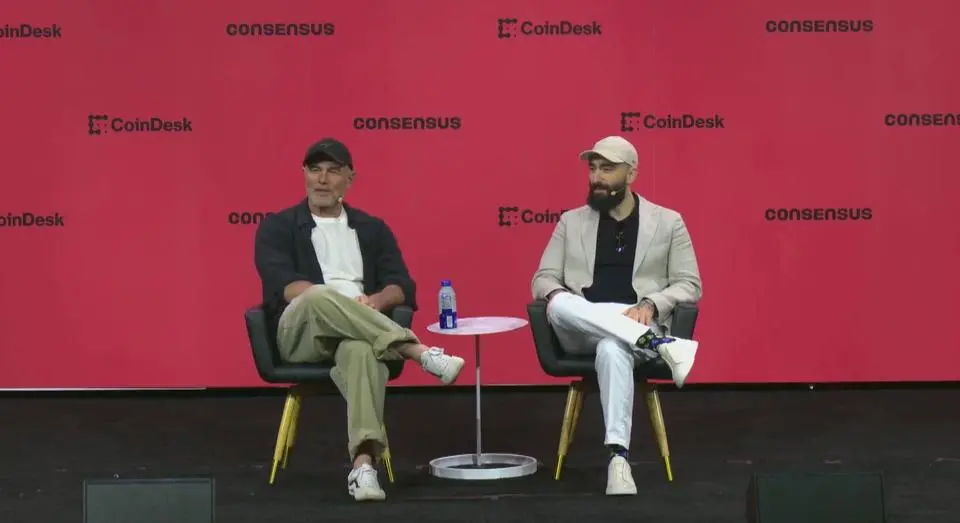
Zcash, the privacy-focused cryptocurrency, has announced a significant technological roadmap that includes the rollout of quantum-recoverable wallets within the next 30 days and a full transition to quantum-proof security by 2027. The move positions Zcash to address emerging threats from quantum computing, which could potentially break the cryptographic foundations of many blockchain networks. Alongside these security upgrades, the project is also pursuing aggressive scaling improvements aimed at achieving transaction throughput comparable to Visa and Mastercard.
Quantum Threats and Cryptographic Resilience
Quantum computing represents one of the most existential risks to current public-key cryptography systems, including those used in major cryptocurrencies like Bitcoin and Ethereum. Shor's algorithm, when run on a sufficiently powerful quantum computer, could efficiently factor large integers and compute discrete logarithms, effectively breaking ECDSA and other widely used signature schemes. Zcash’s announcement reflects a growing awareness within the crypto industry that proactive adaptation is necessary. By integrating quantum-recoverable wallets, Zcash allows users to protect their funds against future quantum attacks even before full post-quantum cryptography is deployed network-wide. The recoverable feature means that if a private key is compromised by quantum adversaries, users can still reclaim their assets through a recovery mechanism built into the wallet protocol.
The timeline for full quantum-proofing is set for the next 12 to 18 months, which Zcash’s development team considers achievable given the current state of research into lattice-based cryptography and other post-quantum primitives. The project has been collaborating with cryptographers and academic institutions to ensure that the implementation is both secure and practical for decentralized networks. This proactive stance contrasts with many other blockchains that have yet to publish concrete roadmaps for quantum resistance.
Scaling Toward Visa-Level Throughput
In addition to quantum security, Zcash is focusing on scaling its network to handle massive transaction volumes. The current transaction processing capacity of Zcash is limited compared to traditional payment giants like Visa, which processes thousands of transactions per second. The roadmap includes the introduction of layer-2 solutions and protocol optimizations that could boost throughput to Visa and Mastercard levels. This is critical for Zcash to achieve mass adoption as a privacy-preserving payment system.
Scaling a privacy-focused blockchain is particularly challenging because shielded transactions require more computational resources and larger proof sizes than transparent transactions. Zcash uses zero-knowledge proofs (zk-SNARKs) to ensure that transactions can be verified without revealing sender, receiver, or amount. The scaling upgrades will involve refining these proofs and potentially adopting new technologies such as Halo 2 or other recursive proof systems that reduce verification overhead. The development team has indicated that they will prioritize maintaining strong privacy guarantees even as throughput increases.
Market Rally and Investment Boost
The announcement of quantum-recoverable wallets and scaling plans has coincided with a sharp rally in the price of ZEC. Over the past 30 days, the token has surged approximately 110%, driven in large part by a major investment from Multicoin Capital, a prominent venture firm specializing in crypto. Multicoin’s involvement signals strong institutional confidence in Zcash’s technology and long-term vision. The price movement also reflects renewed interest in privacy-focused cryptocurrencies as regulatory debates around the world continue to highlight the importance of financial privacy.
Zcash’s market capitalization has risen accordingly, pushing it higher in the rankings among privacy coins. Monero, its primary competitor, has also seen gains but at a more modest pace. Analysts attribute Zcash’s outperformance to the clear technological roadmap and the support from a well-known institutional backer. The rally has also attracted attention from retail investors who are looking for asymmetric upside in the crypto market.
Shielded Pool Growth and Adoption
One of the most notable metrics for Zcash’s adoption is the growth of its shielded pool, which now holds approximately 30% of all circulating ZEC. This is a significant increase from previous years when the shielded pool’s share was much smaller. The surge in shielded transactions is partly due to cross-chain swaps into shielded ZEC via platforms like Near Intents and other interoperability upgrades. These swaps allow holders of other tokens to convert their assets into private Zcash without leaving the security of a decentralized protocol.
The increase in shielded usage indicates that users are increasingly valuing the privacy features of Zcash, especially as blockchain analytics become more sophisticated and governments expand surveillance capabilities. The development team has also proposed several network upgrades, including reducing block times from 75 seconds to lower intervals, which would improve user experience and transaction finality. Additionally, token-holder voting mechanisms are under discussion to give the community more governance power over future protocol changes. These proposals could further incentivize participation and decentralize decision-making.
Comparison with Bitcoin and Cypherpunk Ideals
Zcash CEO Zooko Wilcox has stated that Bitcoin no longer holds up as the cypherpunk-grade money it was originally intended to be. Bitcoin, while decentralized and secure, offers only pseudonymity rather than true privacy by default. All Bitcoin transactions are recorded publicly on the blockchain, and sophisticated chain analysis can often link addresses to real-world identities. Zcash, by contrast, was designed from the ground up with optional privacy, allowing users to shield their transactions from public view. Wilcox argues that as surveillance capitalism expands, the need for digital cash that cannot be traced becomes paramount. Zcash’s quantum resistance upgrades further enhance its long-term viability as a store of value and medium of exchange.
The race to quantum-proof blockchains is not limited to Zcash. Other projects, such as the QANplatform and certain post-quantum Ethereum rollups, are also working on similar technology. However, Zcash’s head start in practical deployment of shielded transactions gives it a unique advantage. The integration of quantum-recoverable wallets is particularly innovative because it provides an immediate safety net for users without requiring a full network upgrade. Once the network itself becomes quantum-proof, the recoverable wallets will serve as an additional layer of security.
Historical Context and Development Milestones
Zcash launched in 2016 as a fork of Bitcoin with added privacy features using zk-SNARKs. The project underwent a controversial transition from a founders’ reward system to a community-driven funding model. Over the years, Zcash has faced challenges including regulatory pressure—especially in Japan and South Korea—and competition from Monero and other privacy coins. Nevertheless, the development team has consistently pushed technical boundaries, such as the activation of Sapling (a major privacy upgrade) and the implementation of Halo 2 to eliminate the need for a trusted setup.
The current roadmap represents the most ambitious set of upgrades since the network’s inception. Achieving quantum proof within 12 to 18 months would be a historic milestone for any cryptocurrency. The scaling improvements are also essential if Zcash hopes to compete not just with other blockchains but with traditional payment systems. Successful implementation could position Zcash as the leading privacy-preserving digital cash for the post-quantum era.
The community has responded positively to the announcements, with discussion forums buzzing about the technical details. Some developers have expressed caution about the feasibility of the timeline, noting that quantum-proof cryptographic implementations require rigorous testing and audits. However, the team’s track record of shipping major upgrades—such as the Orchard protocol, which introduced unified addresses and streamlined shielded transactions—gives confidence that they can deliver.
As the 30-day countdown begins, all eyes will be on Zcash’s ability to roll out quantum-recoverable wallets without security flaws. If successful, this launch could catalyze a broader movement toward quantum readiness across the entire crypto industry. The implications extend beyond privacy: if quantum computers become a practical threat, any blockchain that does not adapt could become obsolete. Zcash’s proactive approach may serve as a blueprint for others to follow.
Source: Coindesk News