

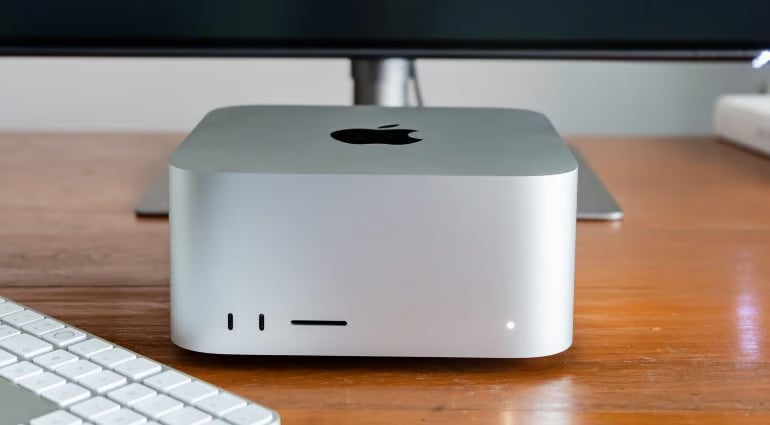
Apple’s desktop Mac lineup is feeling the pressure from rising AI demand and tightening memory supplies. The company has quietly removed several high-end RAM configurations from the Mac Studio and Mac mini, limiting upgrade choices for buyers. According to reports, the changes appeared on Apple’s online store this week, leaving some models with higher starting prices and fewer memory options.
The most significant cuts affect the M3 Ultra Mac Studio. Customers can no longer configure this machine with 256GB of unified memory. Instead, the top option is now 96GB. The M4 Max Mac Studio has also lost its 128GB memory configuration. Meanwhile, the M4 Pro Mac mini no longer offers a 64GB RAM option, leaving only 24GB or 48GB. On the standard M4 Mac mini, Apple removed the 32GB variant, leaving just 16GB and 24GB.
These changes come at a time when Apple’s unified memory architecture has gained popularity among developers running local AI models and agentic software directly on Macs. The combination of growing demand for AI-ready machines and a worldwide shortage of memory chips used in AI servers has strained supply chains across the tech industry. Apple’s desktop systems, which rely on high-bandwidth unified memory, are particularly affected.
AI Demand Is the Driving Force
The memory squeeze is directly tied to the accelerating boom in AI computing. Apple’s unified memory allows the CPU and GPU to share a single pool of RAM, making it highly efficient for running large language models and other AI workloads. Developers and researchers have increasingly turned to Mac Studio and Mac mini as affordable alternatives to dedicated AI hardware. This surge in demand, combined with limited global memory supply, has forced Apple to prioritize certain configurations over others.
Earlier this year, Apple began scaling back options. In March, the company removed the 512GB memory configuration for the Mac Studio, a move that hinted at the current shortages. The company also dropped the 256GB storage version of the Mac mini, effectively raising the starting price from $599 to $799. These incremental reductions reflect a broader trend: high-memory SKUs are becoming harder to source as memory manufacturers allocate their limited production capacity to AI server chips rather than consumer products.
Waiting Times Grow Longer
Even with fewer configurations available, customers face extended delivery estimates. Some Mac Studio models show wait times of 9 to 10 weeks, while certain Mac mini configurations could take 10 to 12 weeks to arrive. The shortages are beginning to spread beyond desktops as well. Higher-memory versions of Apple’s MacBook lineup are also experiencing longer shipping delays, suggesting the supply strain is affecting the entire Mac ecosystem.
For professional users who depend on high-memory Macs for video editing, 3D rendering, or AI model training, these delays and limited options create significant workflow challenges. Many are now forced to consider lower-spec machines or wait several months for their preferred configuration. Apple’s online store currently lists many models as “unavailable for pickup” at retail locations, further limiting purchasing options.
Tim Cook Warns of Prolonged Shortages
During Apple’s recent earnings call, CEO Tim Cook acknowledged the growing supply challenges affecting desktop Macs. “We think, looking forward, that the Mac mini and Mac Studio may take several months to reach supply-demand balance,” Cook said. He also admitted that Apple underestimated demand among users seeking machines capable of running AI tools locally. Cook added that rising memory prices are expected to continue affecting the company in the coming months, potentially leading to further price adjustments or configuration changes.
Cook’s comments highlight a broader issue: the global memory market is experiencing a supply crunch due to the surging demand for AI training and inference infrastructure. Memory manufacturers like Samsung, SK Hynix, and Micron have shifted production capacity to high-bandwidth memory (HBM) used in AI accelerators, leaving less supply for conventional DRAM and unified memory solutions. This shift has driven up prices for the type of memory Apple uses in its Mac lineup, making it costly to offer high-capacity configurations.
Impact on Developers and Creatives
The loss of high-memory options is particularly painful for developers running local AI models. Open-source models like LLaMA and Mistral require substantial RAM to run efficiently, and many developers rely on Macs with 128GB or 256GB of unified memory. With these options removed, developers must either compromise on model size or offload work to cloud-based AI services, which incurs ongoing costs and latency.
Similarly, creative professionals working with large video files, complex 3D scenes, or high-resolution image editing often require more than 64GB of RAM. The removal of the 128GB option from the M4 Max Mac Studio and the 64GB option from the M4 Pro Mac mini limits their ability to work with demanding projects locally. Some may migrate to Intel-based workstations or consider alternative platforms, though Apple’s performance-per-watt advantage remains strong.
The memory shortage also affects educational institutions and research labs that have increasingly adopted Mac mini clusters for AI experimentation. The loss of higher-RAM configurations forces these organizations to purchase more units with lower memory, increasing redundancy and management complexity. Apple’s decision to cap the standard M4 Mac mini at 24GB may push some researchers toward the more expensive Mac Studio or Mac Pro models.
Historical Context and Future Outlook
Apple’s desktop Mac lineup has faced supply constraints before, but the current situation is unique due to the convergence of AI demand and a prolonged memory chip shortage. The company’s transition from Intel to Apple Silicon has made its Macs more attractive for AI workloads, but it has also tied performance closely to unified memory availability. Unlike PCs, where users can add third-party RAM, Apple’s unified memory is soldered onto the motherboard, making configuration choices irreversible.
Looking ahead, Apple may need to redesign its desktop Macs to use cheaper, more readily available memory types, or it could invest in memory production partnerships to secure supply. The company has already taken steps to mitigate the shortage, such as prioritizing higher-margin models like the MacBook Pro and limiting custom configurations. However, these measures are temporary fixes. A more permanent solution will likely require Apple to increase its memory inventory or negotiate long-term supply agreements with memory manufacturers.
In the meantime, buyers seeking high-memory Macs have limited options. The M2 Ultra Mac Studio, which is still available with up to 192GB of unified memory, remains a viable alternative, though it uses the older M2 chip. Apple may also introduce new desktop models with additional memory slots or support for expandable RAM in future generations, but no such announcements have been made. For now, users must work within the constraints of the current lineup and plan for longer lead times.
The broader tech industry is watching Apple’s response closely. If the memory shortage persists, it could accelerate the development of more memory-efficient AI models or push more compute to the cloud. Apple’s focus on on-device AI with its upcoming Apple Intelligence features may also be affected, as those features rely on sufficient local memory to run efficiently. The company’s ability to deliver a seamless AI experience on Macs will depend on resolving these supply issues in the coming months.
As Tim Cook noted, the supply-demand balance for Mac mini and Mac Studio may take several months to restore. Until then, buyers will have fewer choices and longer waits, while Apple works to secure the memory needed to support its growing ecosystem of AI-ready machines.
Source: TechRepublic News