

Overview
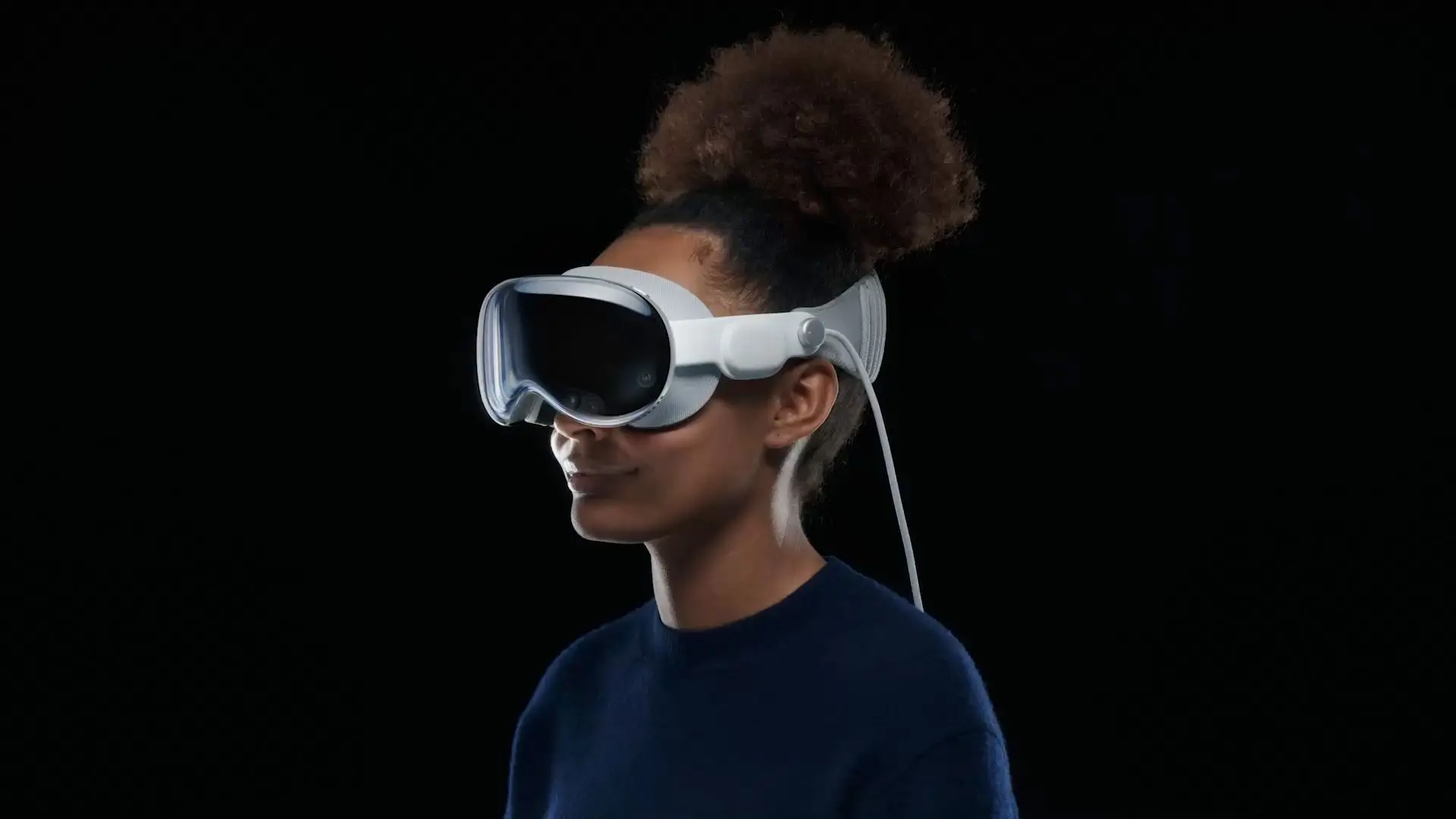
The Apple Vision Pro is Apple's first spatial computer, blending augmented and virtual reality into a single headset. Launched in February 2024 with an M2 chip, it received a significant upgrade in October 2025 with the M5 processor. Priced starting at $3,500 for the 256GB model, it remains a luxury device aimed at early adopters and professionals. Despite its high cost, the Vision Pro showcases cutting-edge technology, including micro-OLED displays with over 23 million pixels, eye-tracking navigation, and a seamless integration with the Apple ecosystem.
Should You Buy the Vision Pro?
The $3,500 price tag makes the Vision Pro prohibitively expensive for most consumers. Reviews highlight that it doesn't easily fit into existing workflows, and some users regret their purchase. However, it excels at watching movies, viewing 3D videos, and serving as a display for a Mac. The device is heavy at over 1.3 pounds, causing fatigue during extended use. Apple improved comfort with the Dual Knit Band (introduced alongside the M5 chip) that includes a second strap over the head and counterweights for better weight distribution. An external battery pack is required, and traveling with the headset is challenging even with Apple's official Travel Case. The Vision Pro is an engineering marvel, but prospective buyers should try it at an Apple Store and conduct thorough research. With the M5 refresh released in October 2025, now is a good time to purchase, as no further update is expected for at least two years.
Design and Display
The Vision Pro resembles a pair of high-end ski goggles with a laminated glass front and an aluminum alloy frame. A magnetic Light Seal conforms to the user's face to block out light, available in multiple sizes. The Dual Knit Band, knitted from a single piece, provides cushioning and breathability. Two audio straps with built-in speakers deliver Spatial Audio. Inside, two micro-OLED displays offer over 4K resolution per eye (23 million pixels total). The M5 model can render 10% more pixels and supports up to 120Hz refresh rate, reducing motion blur and improving clarity. An external EyeSight display projects the user's eyes to others, indicating whether the user is in immersive mode or can see the surroundings.
Cameras, Sensors, and Controls
The Vision Pro uses 12 cameras and five sensors to map the environment and track hands and eyes. Two main cameras transmit over a billion pixels per second for augmented reality views. Eye tracking uses infrared cameras and LEDs to determine where the user is looking. Navigation is entirely hands-free: users select items by looking at them and tapping their fingers together. Voice commands via Siri are also supported. Optic ID authenticates users by scanning their iris, similar to Face ID. A top button captures 3D photos and videos, with a clear indicator on the external display when recording. There are no physical controllers, but Bluetooth keyboards, mice, and gamepads can be connected.
Processors and Performance
The headset is powered by Apple's M5 chip (10-core CPU, 10-core GPU) and a dedicated R1 chip that processes sensor data in under 12 milliseconds. The M5 features a 16-core Neural Engine that boosts AI tasks by up to 50% compared to the M2. Unified memory bandwidth reaches 153GB/s, and the Vision Pro includes 16GB of RAM. Storage options are 256GB, 512GB, and 1TB. The M5's performance allows for smoother graphics, faster Persona generation, and more detailed spatial scenes. Battery life is up to 3 hours for video playback and 2.5 hours for general use—an improvement over the M2 model. The headset can run all day when plugged into a power adapter.
visionOS and Mac Integration
visionOS is the operating system optimized for three-dimensional interaction. Users can place apps anywhere in virtual space, resize windows, and adjust immersion with the Digital Crown. The system supports iPhone and iPad apps, as well as native visionOS apps. FaceTime uses a digital Persona that reflects real-time facial and hand movements. Mac integration allows the Vision Pro to act as a portable 4K display. In visionOS 2.2, Apple added Wide and Ultrawide modes, with Ultrawide equivalent to two side-by-side 4K displays. visionOS 26 brought persistent widgets, improved Personas, and new Environments like a Jupiter experience. The operating system also features Travel Mode for planes and Guest Mode for sharing.
Health, Safety, and Future Plans
Apple warns that the Vision Pro may exacerbate certain medical conditions, including heart issues, migraines, dry eyes, and balance disorders. Pregnant individuals should use extra caution due to risk of nausea. The headset and battery pack can interfere with pacemakers and other electronics. Apple is reportedly pausing work on a next-generation Vision Pro to focus on smart glasses (similar to Meta Ray-Bans) expected in 2026 or 2027. These glasses will have no display but include speakers, microphones, and a camera for AI features. A cheaper enclosed headset may arrive later, but no new Vision Pro model is in active development. Apple's long-term AR plans include full AR glasses (potentially by 2028) and even futuristic contact lenses, though these are years away.
Source: MacRumors News