

Introduction to the New Feature
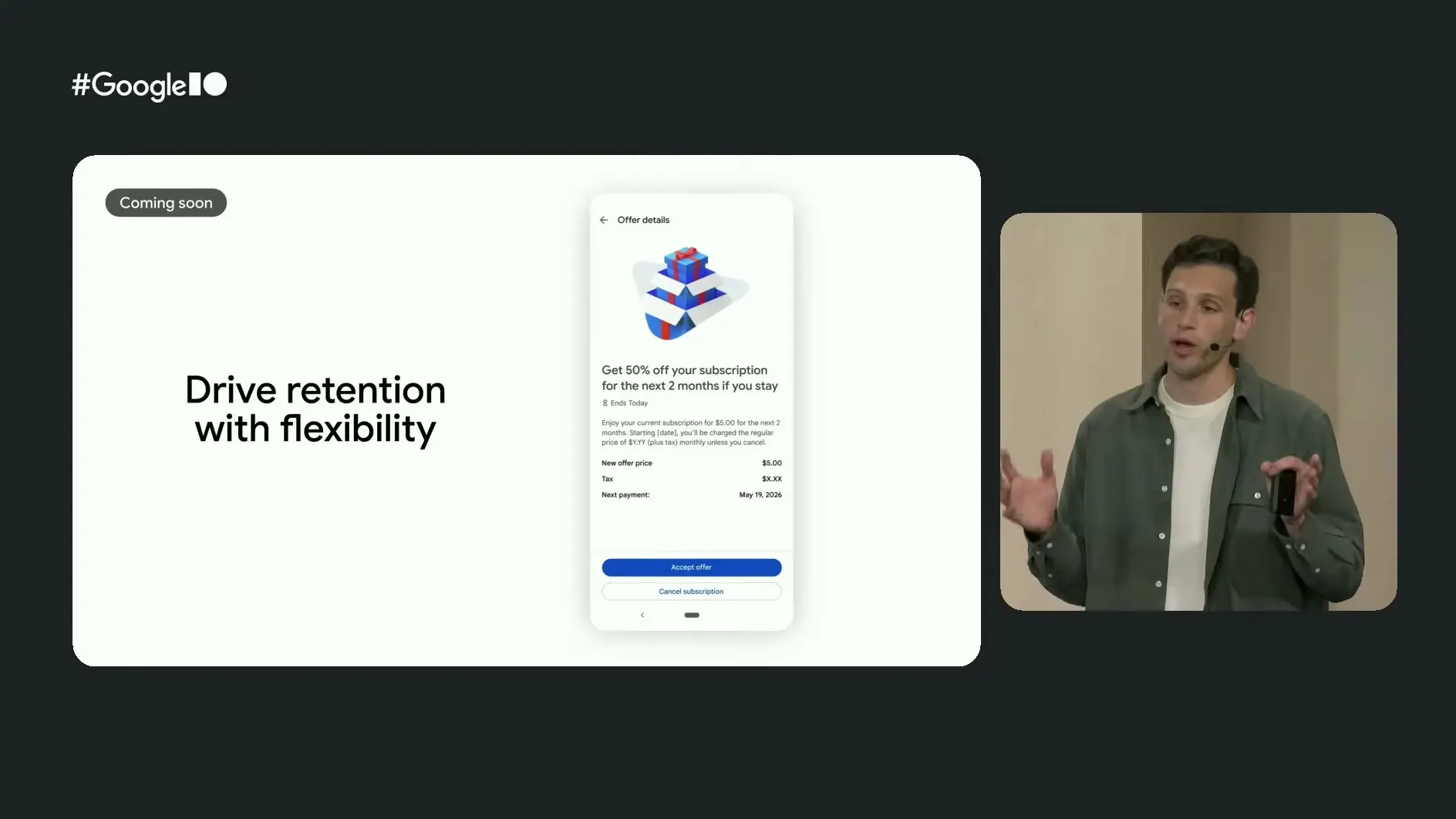
Google Play Store is evolving its subscription management system with a new capability designed to reduce subscriber churn. Announced at the recent Google I/O developer conference, the update enables app developers to present downgrade options when users click the “cancel subscription” button. Instead of immediately confirming cancellation, users now see a menu that includes a “Keep subscription” button, a “Cancel subscription” button, and—where applicable—one or more alternative plans at a lower price point.
How It Works in Practice
The feature leverages the in-app Subscription Management API that Google introduced earlier. Developers can integrate this API to allow users to change plans directly within the app. However, the key innovation is bringing this functionality into the Play Store cancellation flow itself. As explained by Google product manager Diego Dayan during the I/O keynote, “If a user hits cancel, you can offer them a downgrade instead.” The downgrade options appear alongside the standard cancellation buttons, giving users a quick alternative without forcing them to navigate away from the billing screen.
From a user interface perspective, the process remains largely frictionless. The cancellation menu still prominently displays the “Cancel subscription” option, and users only need to scroll slightly further if they choose to proceed with cancellation. This contrasts with some other platforms that have faced criticism for making cancellation processes deliberately convoluted. Google’s approach appears balanced—offering developers a retention tool while ensuring the user’s ability to cancel is not hidden or unduly complicated.
Implications for App Developers
For developers, this feature is a potentially powerful tool to reduce involuntary churn. Many users cancel subscriptions impulsively, perhaps due to a temporary need to cut expenses or because they forgot the value the app provides. By presenting a lower-priced tier, developers can retain a customer at a reduced revenue level rather than losing them entirely. The option to offer a discounted subscription for a limited time (as hinted in the announcement) adds further flexibility. This can be especially valuable for apps with multiple subscription tiers—such as productivity tools, media streaming services, or gaming platforms—where a cheaper plan might better suit the user’s current financial situation or usage pattern.
Moreover, the feature integrates smoothly with existing billing systems. Developers don’t need to overhaul their subscription logic; they simply configure the downgrade options within the Google Play Console. The API handles plan changes and prorated billing automatically. This reduces developer effort and encourages broader adoption.
Historical Context and Industry Trends
The move is part of a broader industry trend toward more flexible subscription management. Over the past few years, both Apple and Google have faced regulatory scrutiny over the transparency and ease of cancellation for subscription services. For instance, the European Union’s Digital Markets Act and various consumer protection laws in the United States have pushed for simplified cancellation processes. Google’s current approach seems designed to preempt further regulation by demonstrating that it already provides a straightforward cancellation path while still offering tools for developers.
In addition, the feature arrives amid a growing number of subscription-based apps and services. The market for mobile subscriptions has exploded, with users often juggling multiple recurring payments. High churn rates have become a major concern for developers, prompting them to invest in retention strategies like personalized offers and reminder emails. The Play Store’s in-flow downgrade option adds a direct, immediate retention mechanism that does not rely on external communication channels.
User Experience Considerations
Critically, Google has been careful not to introduce dark patterns that could deceive or frustrate users. The cancellation button remains clearly visible and functional; the downgrade options are presented as an alternative, not as a blocker. This is in contrast to some notorious industry practices where cancellation flows involve multiple steps, confirmation dialogs, or hidden buttons. Google’s own design guidelines discourage manipulative interfaces, and this feature aligns with that philosophy. Users who genuinely want to cancel can do so in as few as two taps: one to open the subscription menu and one to confirm cancellation. The presence of a downgrade option does not increase the number of steps required.
Additionally, the feature is opt-in for developers. Not every app will implement it, and users won’t see downgrade offers if the developer hasn’t configured them. This ensures that the cancellation flow remains consistent across apps unless a developer deliberately chooses to modify it.
Integration with Other Play Store Updates
This subscription downgrade capability is not the only recent Play Store enhancement. At the same I/O event, Google announced that Play Store app recommendations would be integrated into Gemini, the company’s advanced AI assistant. This means users can ask Gemini for app suggestions based on their interests, and the assistant will pull recommendations directly from the Play Store. Furthermore, the Ask Play feature is being expanded to allow natural language queries about apps, such as “Find a photo editor that supports vector graphics.” These updates collectively aim to make the Play Store more intelligent and responsive to user needs.
The subscription downgrade feature, however, is perhaps the most immediately impactful for developer revenue and user retention. It addresses a core pain point for subscription-based businesses: the high cost of acquiring new customers versus retaining existing ones. According to industry research, increasing customer retention by 5% can boost profits by 25% to 95%. Thus, even a small improvement in retention rates can have a significant financial impact.
Technical Implementation Details
Developers interested in using the new feature must integrate the Subscription Management API into their apps. This API was originally introduced to let users change plans without leaving the app. However, the new cancellation flow integration means that even if a user doesn’t use the in-app plan change option, they will see downgrade alternatives when they attempt to cancel through the Play Store billing screen. The API supports various subscription models, including monthly, yearly, and promotional pricing. Developers can specify exactly which plans are offered as downgrades and can also apply discounts for a limited time to incentivize retention.
From a billing perspective, plan changes are handled seamlessly: if a user downgrades mid-cycle, the system calculates a prorated credit and applies it to the new plan. There is no need for manual refunds or complicated adjustments. The entire process is automated through Google’s payment infrastructure, ensuring a smooth experience for both users and developers.
Potential Impact and Future Directions
The feature is currently rolling out to developers and will be available to users in the coming weeks. Its impact will likely be measured through decreased churn rates and improved customer lifetime value for developers who adopt it. For users, the main benefit is the flexibility to choose a more affordable plan without losing access to the app’s core functionality. This could reduce the number of users who abandon an app entirely due to price sensitivity.
Looking ahead, we may see Google expand this concept to other areas, such as offering temporary free trials or ad-supported tiers during cancellation. The company has also been testing subscription bundles and family plans, which could further enrich the options presented at the point of cancellation. Additionally, as AI becomes more integrated into the Play Store, there might be personalized downgrade suggestions based on user behavior data.
In summary, the Google Play Store’s new subscription downgrade feature represents a thoughtful attempt to balance developer needs with user expectations. It provides a retention mechanism without sacrificing cancellation ease, setting a positive example for the industry. As the subscription economy continues to grow, such innovations will become increasingly important for maintaining healthy app ecosystems.
The rollout is expected to be gradual, with developers needing to update their apps and configure the new options in the Play Console. Users should start seeing these downgrade offers in the coming weeks for participating apps. The feature marks another step in Google’s ongoing effort to improve both the developer and user experience on its app store.
Source: Android Authority News